Phase 2 of 3 · Size
Size: the same system, rebuilt with your numbers.
A system that worked on paper will not necessarily work for you. Trading a stock worth $20 is different from trading one worth $500, $10,000 of capital is different from $60,000, one broker is different from another. In this phase you rebuild the system’s history with your capital, your leverage and your commissions, as many times as you like.
Why it cannot be skipped
Until you size a system, the numbers you saw belong to someone else. Some systems are within your reach, others are not: with little capital the margin required can block almost every trade, with too much leverage a bearable loss becomes one that wipes out the account. Simulations are unlimited in every plan, the free one included.
01 Watchlist
The watchlist: your short list.
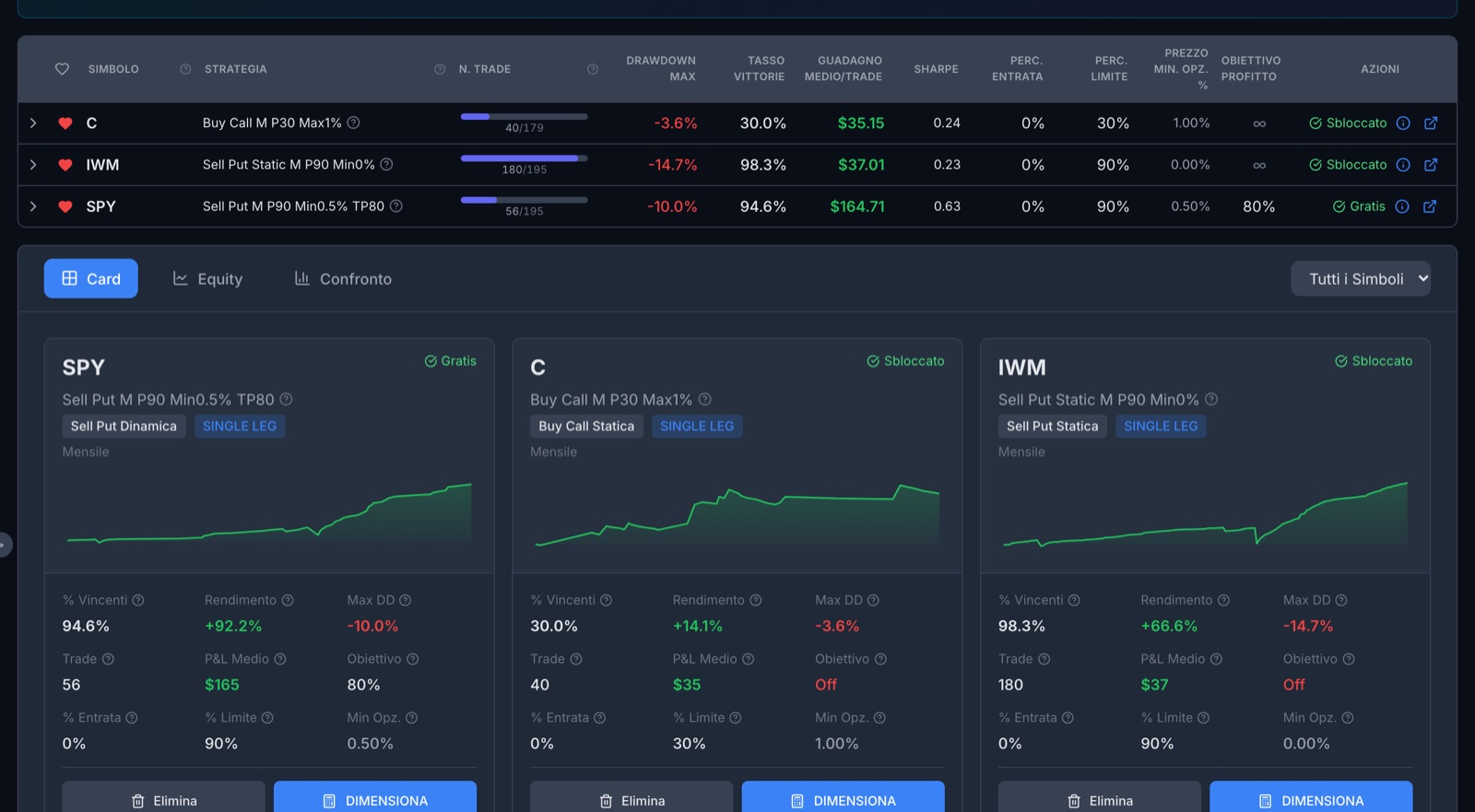
Everything you set aside with the heart ends up here. It is not a catalogue, it is your selection, and it is the way into this phase: only systems in your watchlist can be sized. Every system has its card with the curve, the main numbers and the Size button.
- Card: one card per system, with its curve and essential metrics
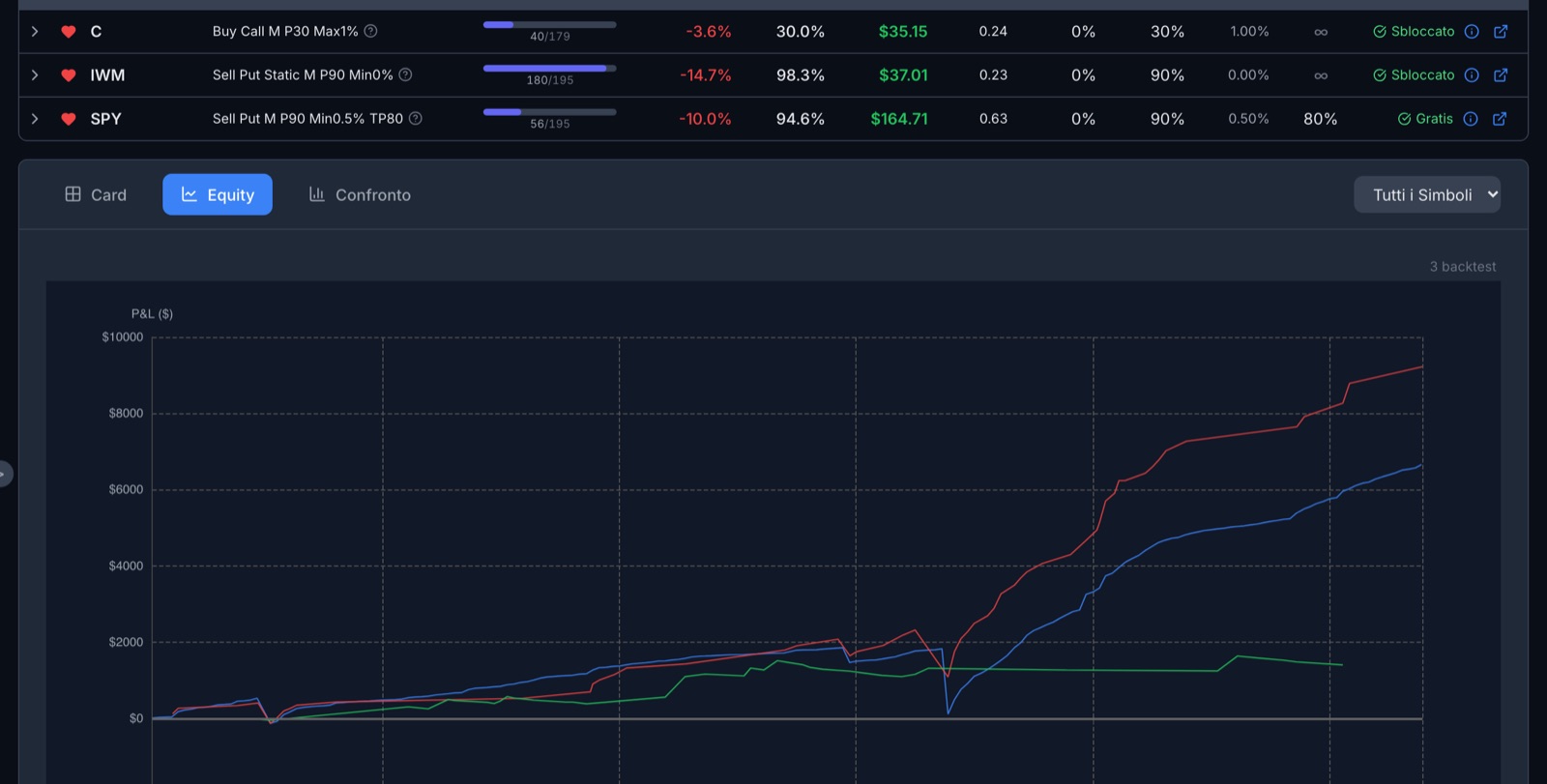
- Equity: the curves of your saved systems on top of one another, to see whether they move together
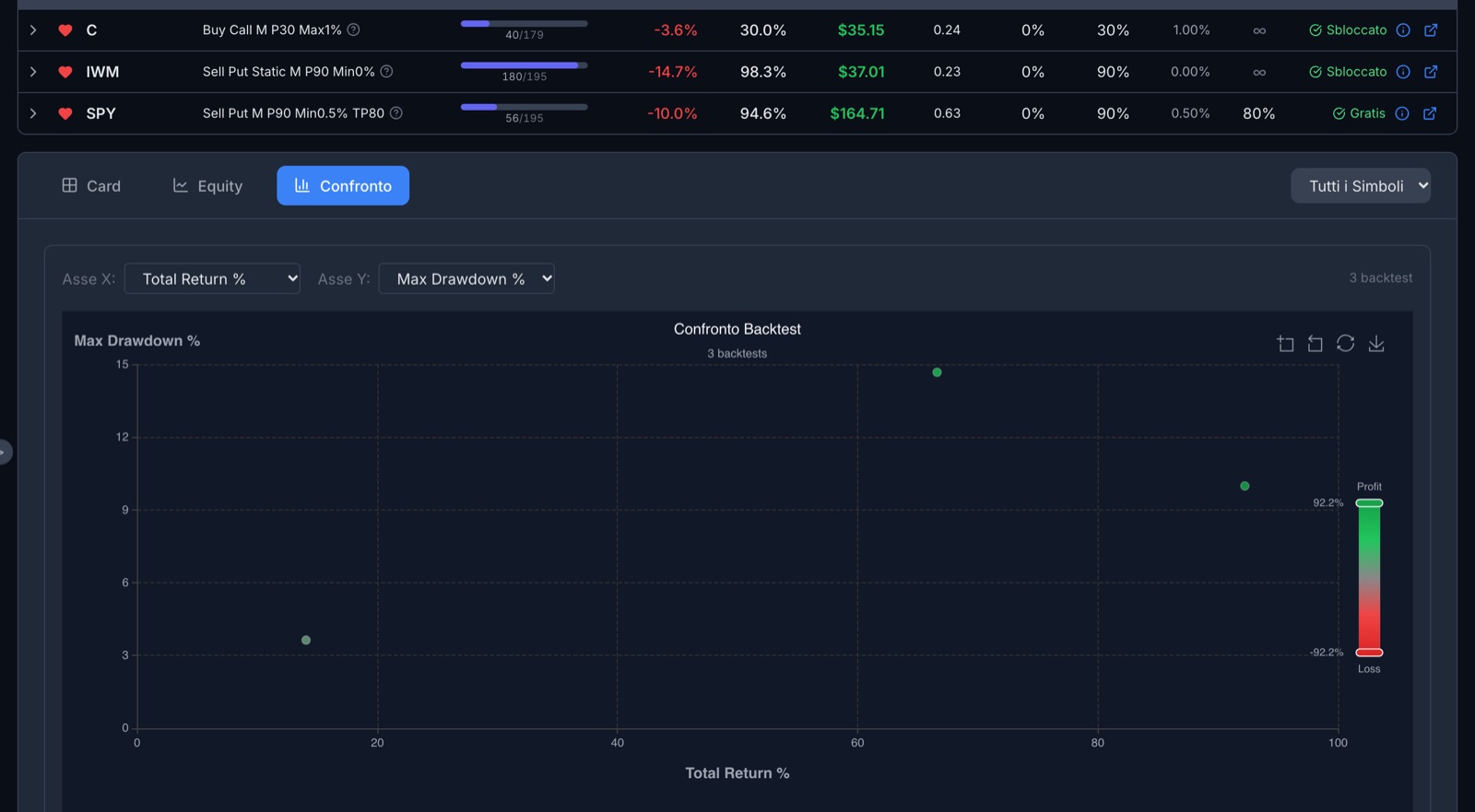
- Compare: the systems side by side on the metrics you choose
- The counter tells you how many slots you have: your plan decides that
No need to fill it straight away
A watchlist is built over time. Three systems studied well are worth more than thirty saved in a hurry.
Watchlist of 3 systems with the Free plan, unlimited with Starter and Pro.
Equity
Compare
02 Simulate Systems
The calculator: five numbers, all yours.
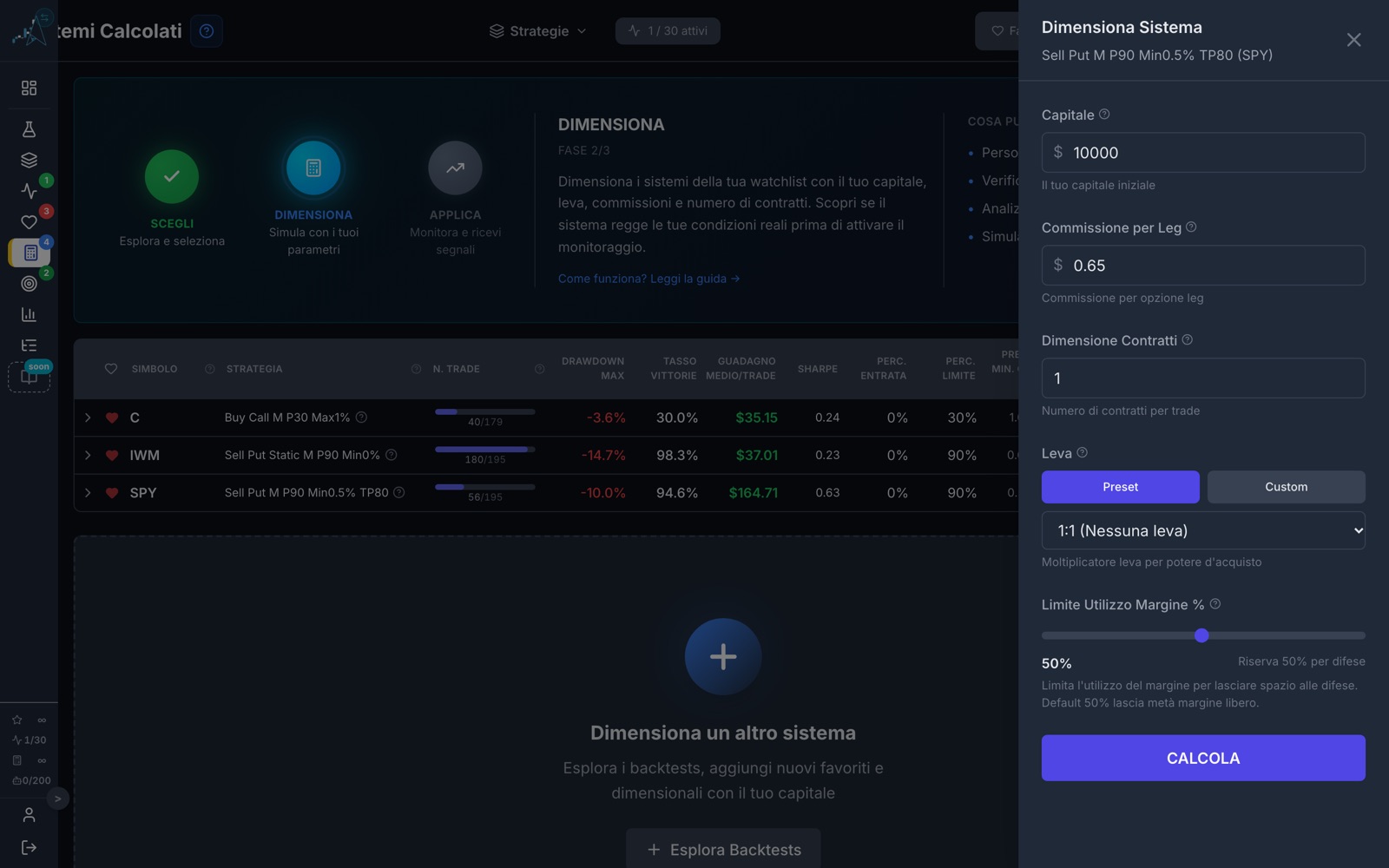
From the Simulate Systems page you open the calculator on the system you want to try. These are the only things you can change: the rest is the history of the market, just as it happened.
- Capital: how much you want to put into this system
- Commission per leg: your broker’s, for every option opened or closed
- Contracts: how many for each trade; each one is worth 100 shares of the underlying
- Leverage: how much the broker multiplies your buying power
- Margin limit: how much of the margin you are willing to use; the rest stays in reserve for difficult moments
Commissions matter more than they seem
You pay them on every leg, when opening and when closing. A four-leg structure at $0.65 per contract costs $5.20 per trade, before it has earned anything at all.
Unlimited simulations in every plan.
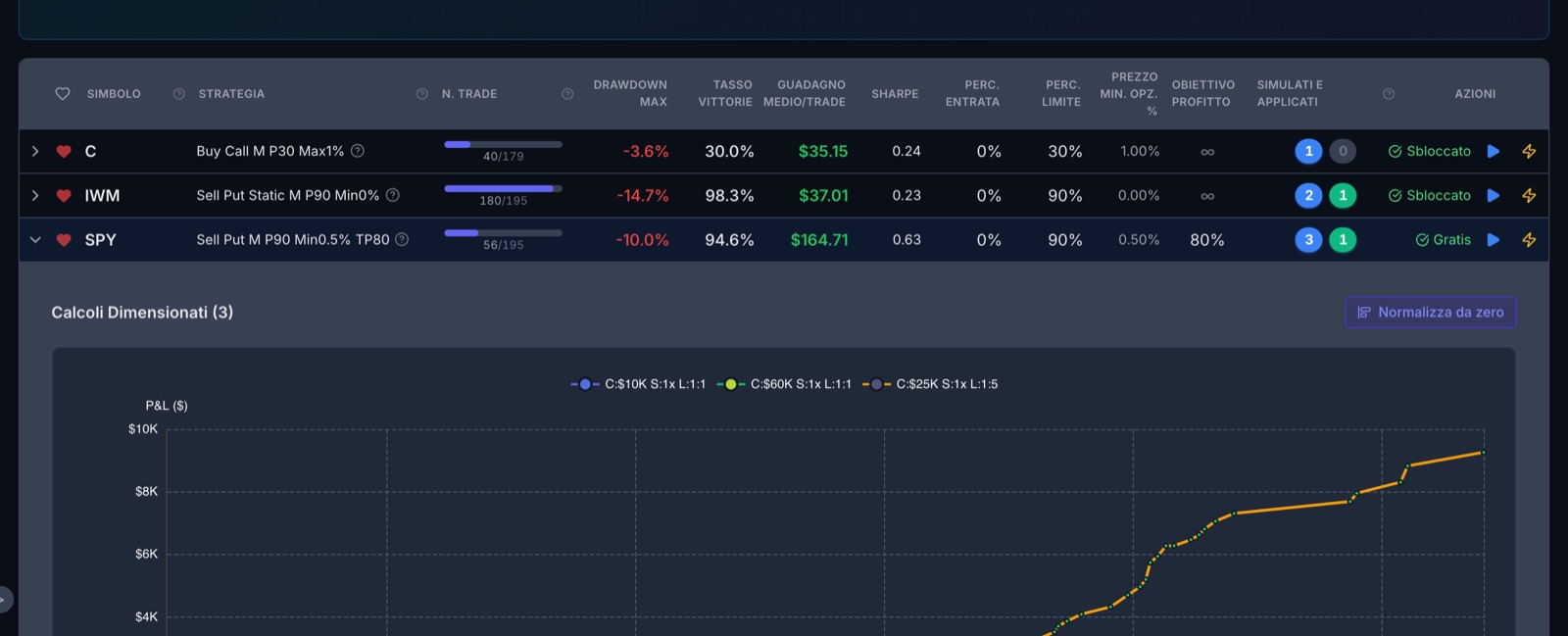
03 Simulated Backtest
The result: did the account survive?
The calculation takes a few seconds. Then you find the same system rebuilt on your capital: how many trades it could really make, how much it returned, how much it lost at its worst moment, how much you spent on commissions and how much margin it used, trade by trade.
- At the top, the parameters used and the result: return, final capital, worst loss, trades executed, commissions paid
- The curve of your capital, trade by trade
- The worst periods, recalculated on your numbers
- Margin usage: how much was needed and how much was still free
Look at the loss before the return
Leverage multiplies gains and losses by the same amount: a system that lost 15% loses 75% at 5:1 leverage. A system that returns a lot and at some point wipes out the capital is not a system you can use.
In every plan.
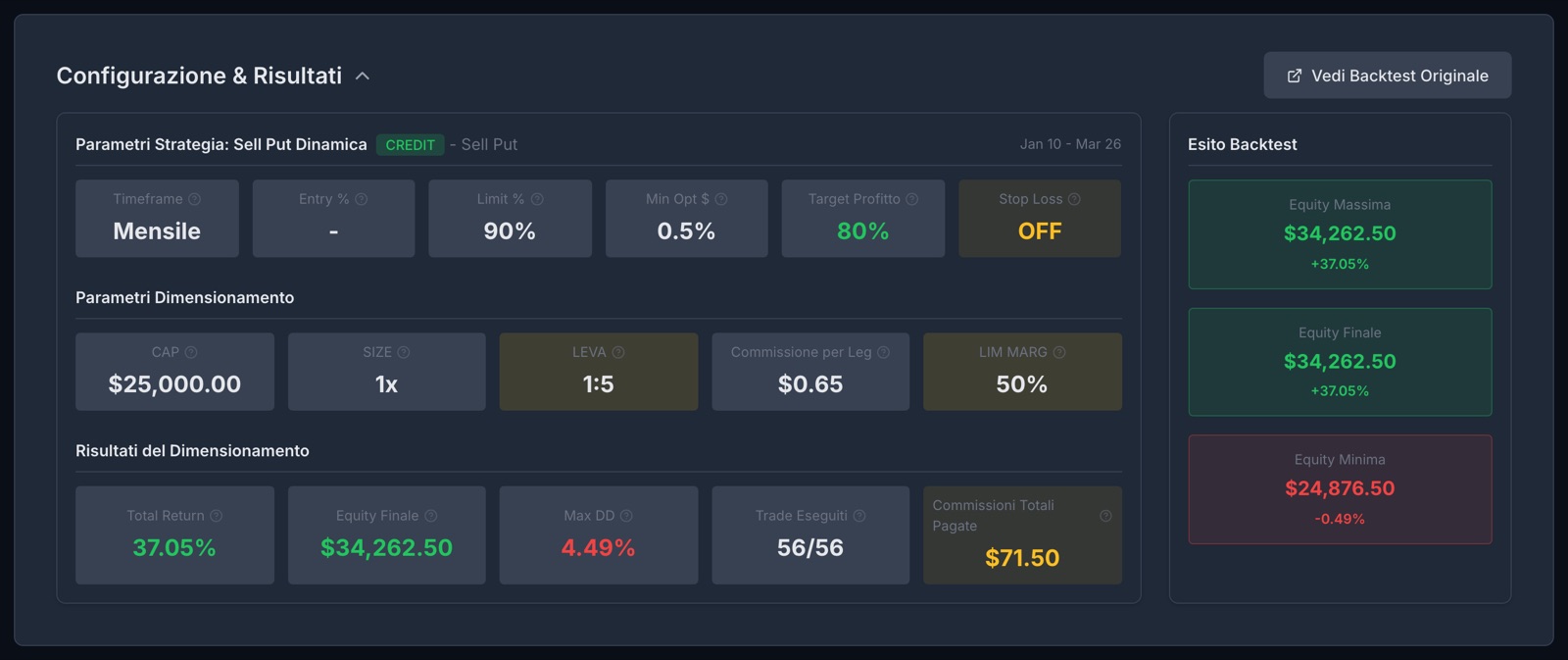
Your capital
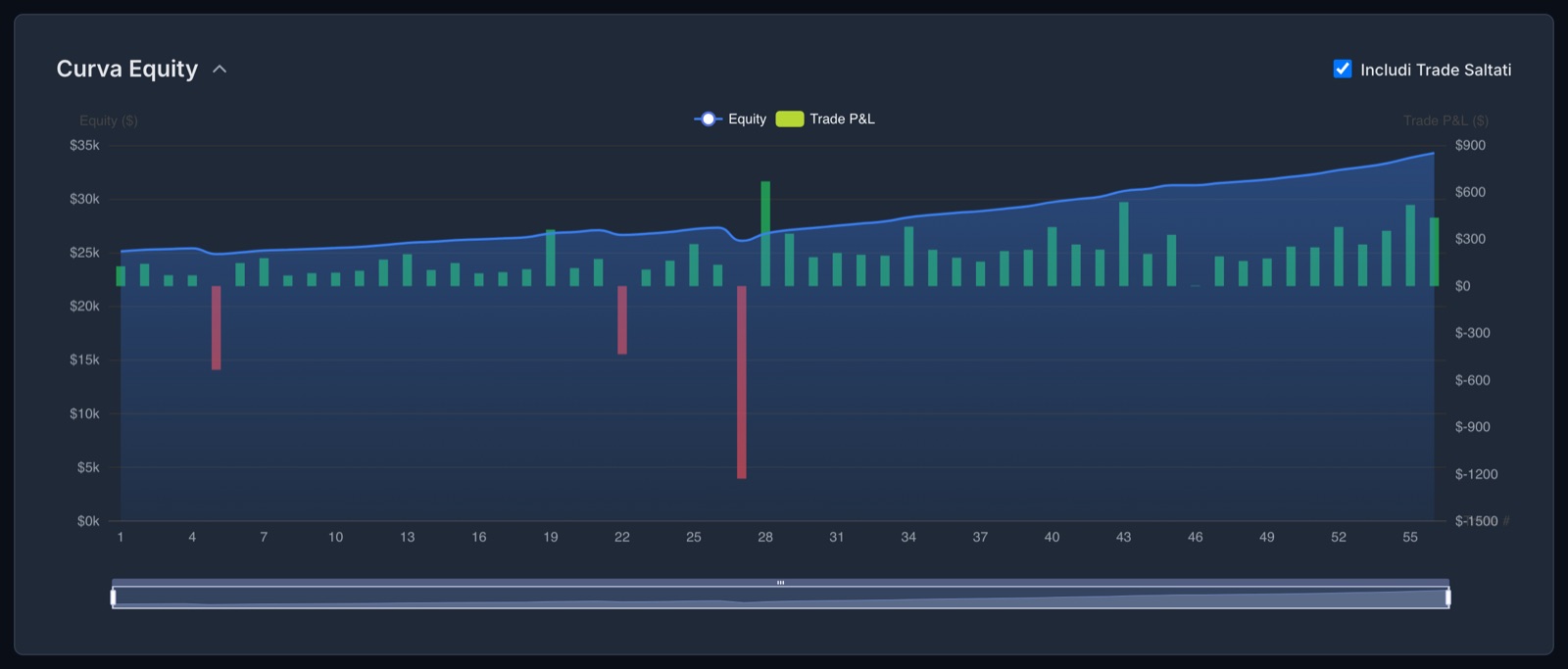
The worst periods
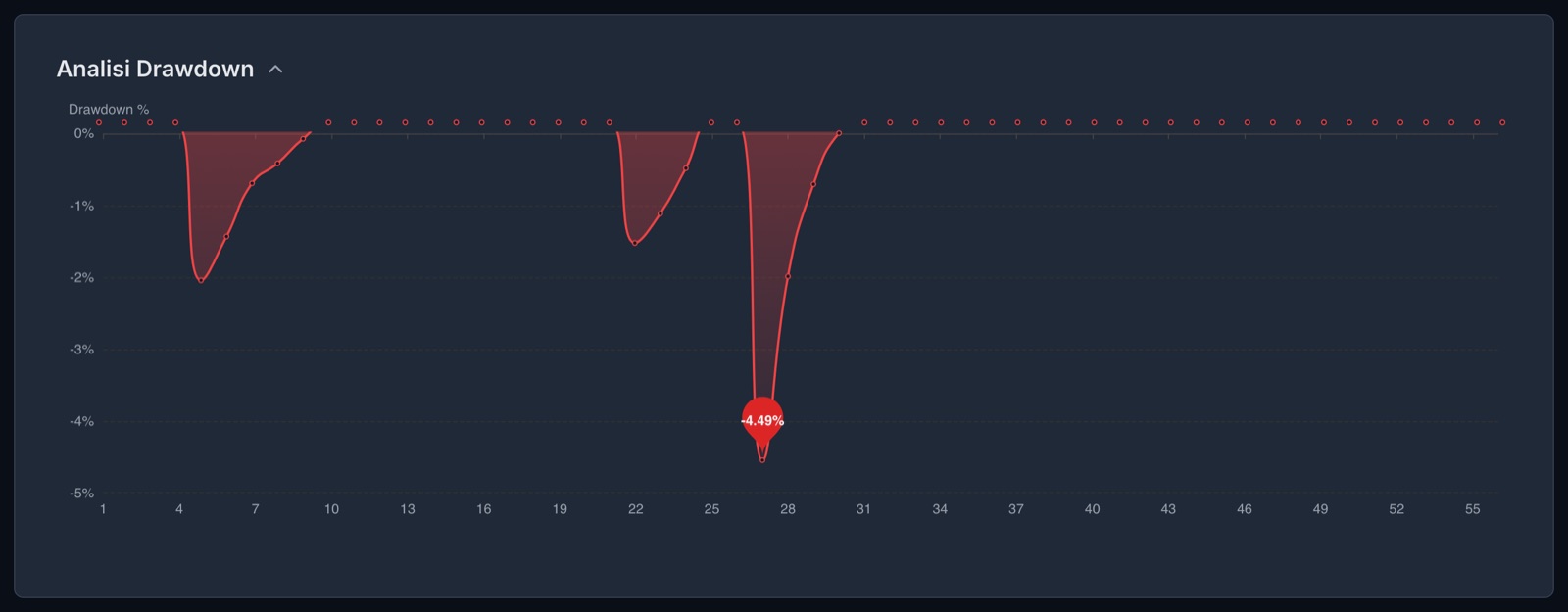
The margin
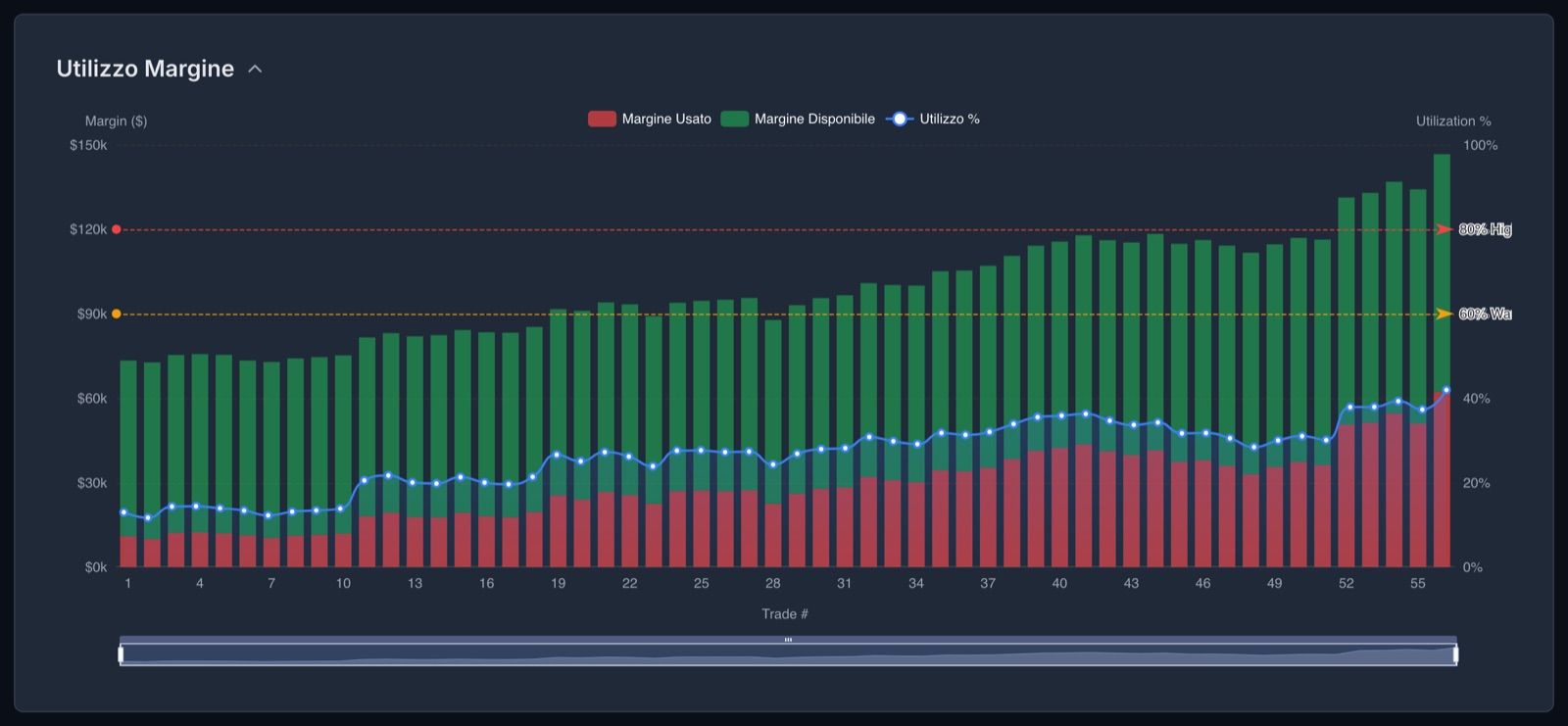
When it is not within your reach
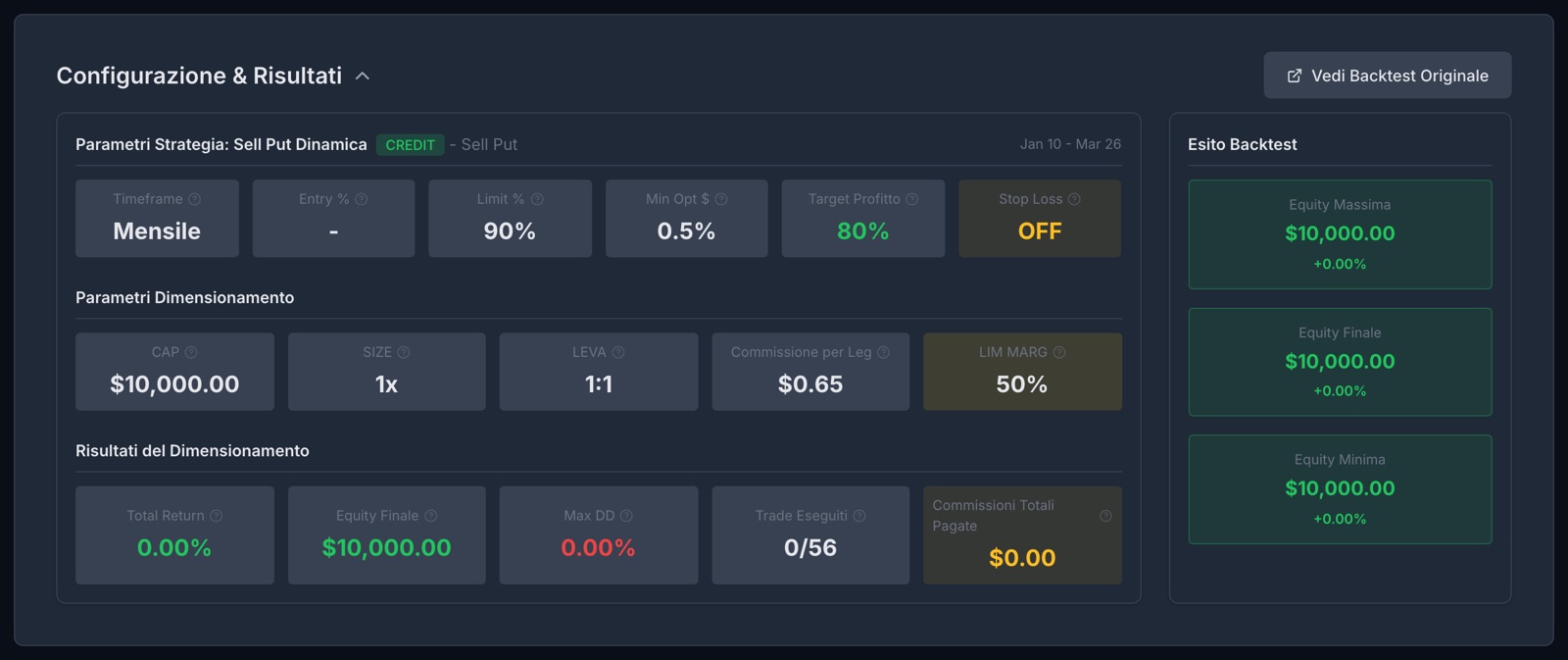
The mistake to avoid: raising the leverage to make the numbers work.
If a system does not return enough with your capital, the temptation is to increase the leverage. But leverage does not improve the system, it makes everything bigger, the worst day included. Better to try several amounts of capital and several levels of leverage, put the results side by side and choose the one where the worst loss is one you can really bear.
Does the result convince you? Apply it.
From the result page, Apply brings the sized system into your systems, ready to be turned on. It is the last step before the market, and there too the decision stays yours.